
Five Stretches That Will Save Your Back This Shovelling Season
Nobody warms up to shovel a driveway. That is exactly why the emergency room is busy in January.
Everyone in the Copper Country knows somebody who put their back out shovelling. It is such a routine winter event that it barely registers as an injury — just something that happens, like the plough burying the end of your driveway ten minutes after you finish clearing it.
It does not have to be routine. The mechanism is well understood and the prevention is boring, free and takes ten minutes.
Why shovelling is so hard on a back
Take a movement scientist's view of the job and it looks alarming:
- Loaded flexion. Bending forward with weight in your hands is the position spinal discs least enjoy.
- Rotation under load. Bending and twisting at once is the combination most associated with disc injury — and every throw does exactly that.
- Repetition. Hundreds of reps in a session, hundreds of sessions a winter.
- Cold tissue. Cold muscle is stiffer, less elastic, and more injury-prone. You start cold and stay cold.
- No warm-up. Nobody warms up. Everybody just goes.
- Time pressure. Late for work, snow still falling, so you rush.
You would never design a training programme like this. Yet every household up here runs it thirty times a winter.
Before you go out (about five minutes)
1. Wall calf and hamstring — 2 minutes
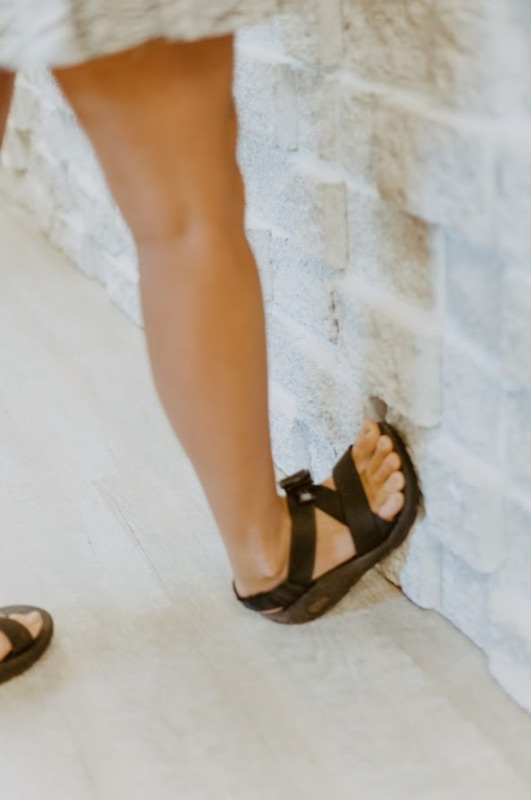
Hands on a wall, one foot back, back leg straight, heel down. Hold 30 seconds, swap, repeat.
Why: tight calves and hamstrings restrict how far your hips can hinge, which forces the movement into your lower back instead. Loosen the back of the legs and your hips can do their job.
2. Doorway chest opener — 1 minute

Forearm flat on a doorframe, elbow at shoulder height, step gently through until you feel a stretch across the chest.
Why: shovelling is a pushing and pulling movement done in front of your body. Tight pectorals round your shoulders forward and load the mid-back further.
3. Standing torso rotations — 1 minute
Feet shoulder-width, soft knees, hands on hips or crossed at your chest. Rotate slowly left and right, ten times each way. Controlled — not a swinging warm-up from a school gym class.
Why: you are about to rotate under load several hundred times. Rotate a few times unloaded first.
While you are out there
Not a stretch, but it prevents more injuries than any stretch will:
- Push the snow rather than lifting it wherever the layout allows. A pushed drive is not a lifted drive.
- When you must lift, hinge at the hips and keep the load close. Bend your knees, keep your back long.
- Never throw over your shoulder. The twist-under-load throw is the single most common injury moment. Turn your whole body and face where the snow is going.
- Take smaller scoops. Wet Lake Superior snow is far heavier than it looks. Half a scoop twice beats one heroic scoop.
- Swap sides regularly. Switch which hand is forward every few minutes.
- Take a break every 15 minutes and do one standing back extension: hands on your lower back, gently arch backwards, hold five seconds. It reverses the flexion you have been accumulating.
- Go out earlier and more often. Two easy clears beat one enormous one.
After you come in (about five minutes)
4. Standing quad stretch — 2 minutes

Why: quads and hip flexors work hard through all that hinging, and when they tighten they tilt the pelvis and load the lower back.
5. Child's pose — 3 minutes

Kneel, sit your hips back toward your heels, walk your hands forward, let your head rest.
Why: it is the single best decompression position after an hour of loaded flexion — and holding it for two to three minutes is what makes it work. Most people quit at twenty seconds and get almost nothing out of it.
The rest of it
- Dress in layers you can shed. Overheating leads to unzipping, which leads to a cold sweaty back.
- Drink water. You dehydrate in cold weather more than you notice.
- Do not do it first thing. Discs are most hydrated and most vulnerable in the first hour after waking. Have a coffee. Move around.
- Heat afterwards, not ice, for general soreness. This is where a sauna session earns its keep in a Houghton winter.
Stop immediately if
You have chest pain, pressure or tightness; shortness of breath out of proportion to the effort; pain down an arm or jaw; pain radiating down a leg; or any numbness or weakness. Snow shovelling places genuine strain on the heart and cold air compounds it. If you have a cardiac history, talk to your doctor about whether you should be shovelling at all — and call 911 for chest symptoms rather than waiting to see.
When it is already too late
If you have already tightened up:
- Deep tissue or CoreStone massage for dense muscular tightness. Heated stone is particularly welcome mid-winter.
- Myofascial release if the same spot has been going out every winter for years. That is a pattern, not an event.
- Sauna for general stiffness and to warm tissue before stretching.
- A doctor for anything with numbness, tingling or leg pain. That is not a massage problem.
Our free stretch guide has fourteen stretches with photographs, and the massage menu covers the rest.
Frequently asked questions
Shovelling combines loaded forward bending with rotation, repeated hundreds of times, in cold weather, with no warm-up. Bending and twisting under load is the classic mechanism for disc and muscle strain, and cold tissue is stiffer and more injury-prone than warm tissue.
Both, but they do different jobs. Beforehand, a few minutes on calves, hamstrings, chest and gentle torso rotation prepares the tissue. Afterwards, quad stretches and a long child's pose decompress a back that has spent an hour in loaded flexion.
Push rather than lift wherever possible; when you must lift, hinge at the hips with the load close to your body; never throw over your shoulder — turn your whole body to face where the snow is going; take smaller scoops; and go out more often so each session is shorter.
Stop immediately and seek emergency help for chest pain, pressure or tightness, shortness of breath out of proportion to the effort, or pain in the arm or jaw. Stop and see a doctor for pain radiating down a leg, numbness or weakness. If you have a cardiac history, discuss shovelling with your physician in advance.
Come and see us in Houghton
Massage, full spectrum infrared sauna, wellness sessions and AVEDA salon services — book online, or call and talk it through first.
Keep reading
More from the Journal
 Spa Life
A Year of Self-Care in the Copper Country: Your Seasonal Spa Calendar
Most people book a massage the week their back finally gives out. Here is the version where you get ahead of it instead.
Read the guide → Spa Life
Booth Rental in the U.P.: Is Renting a Chair Right for You?
Renting a chair is the closest thing our industry has to running your own business without building the building. It is not for everyone.
Read the guide → Spa Life
How to Give a Spa Gift Certificate That Actually Gets Used
The problem with most spa gifts is not the amount. It is that the recipient cannot work out what it buys.
Read the guide →