
How Often Should You Use an Infrared Sauna?
Consistency beats duration. Three short sessions a week will do more for you than one long one.
Nearly everyone who tries the sauna and likes it asks the same question on the way out: how often should I be doing this?
The honest answer is that it depends on why you are here — but there is a defensible default, and it is lower than most enthusiasts will tell you.
The default: two to three times a week
For most people, most of the time, two to three sessions a week is where the benefit shows up and the cost — in time, in money, in effort — stays reasonable.
At that frequency people most commonly report better sleep, less general stiffness, and a mood benefit that becomes noticeable in the depths of winter. Below that, sauna tends to be pleasant but forgettable. Above it, returns diminish for most people who are not training hard.
The reason has less to do with physiology than with life. A twice-weekly habit survives a busy month. A five-times-weekly habit collapses the first week something goes wrong, and then does not restart.
Adjusting for what you are actually after
General wellbeing and stress. Two a week. Consistency matters far more than length; two 30-minute sessions beat one 60-minute session comfortably.
Recovery from training or heavy physical work. Three to four a week, ideally within a few hours of the work. Shorter sessions are fine here — 15 to 30 minutes post-effort is plenty.
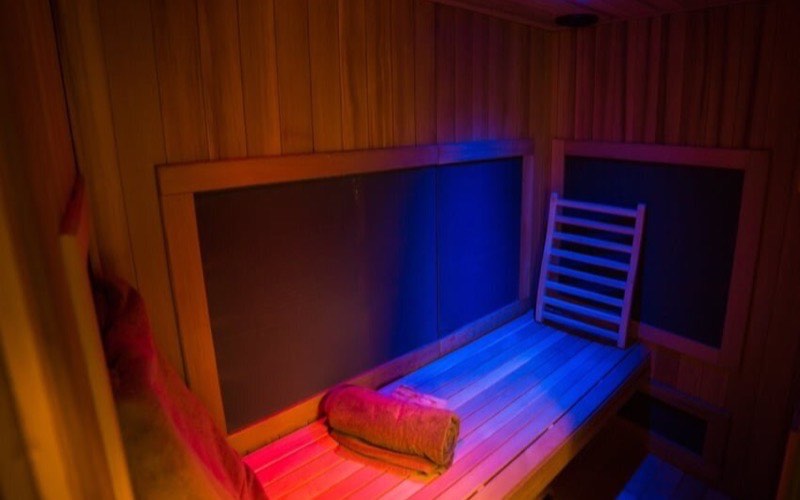
Winter mood. Two to three a week, and try to make one of them a daylight-hours session if your schedule allows. Adding chromotherapy is worth doing deliberately rather than at random.
Sleep. Two to three a week, in the evening — a couple of hours before bed rather than immediately before. The cooling-down phase afterwards is part of the effect.
Sore muscles and stiffness. Three a week during a hard stretch, dropping to two when things settle.
Building up sensibly
If you have never used an infrared sauna, do not start at 60 minutes.
- Weeks 1–2: 15 minutes, once or twice a week. Learn how your body responds.
- Weeks 3–4: 30 minutes, twice a week. This is where most people settle permanently.
- Month 2 onward: add a third session, or extend one to 60 minutes — one change at a time, not both.
Session lengths and packages are on the sauna page, including monthly packages structured around weekly booking, which exist precisely because weekly rhythm is what makes this work.
Hydration, properly
This becomes the limiting factor as frequency rises, and most people do it badly.
- Start hours before, not on the way in. Arriving already dehydrated is the most common reason people feel wrung out afterwards.
- Drink during, not just after. Bring water in with you.
- Replace electrolytes if you are going three or more times a week, or sweating heavily. Water alone at high sweat volumes is not sufficient.
- Watch the obvious signals: urine colour, headache, that flat feeling the next morning.
Signs you are doing too much
Sauna is a stressor. A useful one, applied well — but a stressor, and stress needs recovery.
- Sleeping worse, not better. The clearest early signal.
- Headaches after sessions, especially the next morning.
- Lingering fatigue rather than the pleasant tiredness of a good session.
- Dizziness on standing. Stop, hydrate, and cut back.
- Dreading it. Under-rated as a signal. If a thing you chose to do feels like a chore, do it less.
The correct response to any of these is to reduce frequency or length for a couple of weeks, not to push through.
Who should check with a doctor first
Talk to your physician before starting a sauna routine if you are pregnant, have a heart condition, have low or unstable blood pressure, are on medication affecting heat tolerance or fluid balance, or have a condition that impairs sweating or heat regulation. Sauna is a wellness practice, not a treatment.
Making it stick
- Same days every week. Tuesday and Friday beats "twice a week, whenever".
- Attach it to something. After the gym. Before a Friday night. On the way home.
- Book ahead. A booked appointment is kept; an intention is not. Monthly packages help precisely because they are structured around weekly booking.
- Use the shower. Every session includes a private spa shower with AVEDA products. It turns a sweat into an actual break.
- Bring someone. A second participant can be added to 30 or 60 minute sessions, and a habit with a friend attached survives January.
New to infrared? Start with what 30 minutes actually does and how it differs from a traditional sauna.
Frequently asked questions
Two to three sessions a week suits most people. That is where better sleep, reduced stiffness and a noticeable winter mood benefit typically show up, while remaining sustainable. Athletes and people doing heavy physical work often benefit from three to four, ideally within a few hours of the effort.
Daily use is not necessary for most people and increases the demands on hydration and recovery. If you do go daily, keep sessions short, replace electrolytes rather than water alone, and watch for warning signs — worse sleep, headaches, lingering fatigue or dizziness all mean cut back.
Fifteen minutes. Infrared builds gradually, so a short first session lets you learn how your body responds without overdoing it. Most people move up to 30 minutes within a few weeks and settle there.
Generally no. Consistency produces better results than duration — two or three 30-minute sessions across a week do more for sleep, stiffness and mood than a single 60-minute session, and the habit is far more likely to survive a busy month.
Come and see us in Houghton
Massage, full spectrum infrared sauna, wellness sessions and AVEDA salon services — book online, or call and talk it through first.
Keep reading
More from the Journal
 Sauna & Recovery
Full Spectrum Infrared vs. Traditional Sauna: What Is Actually Different?
In a region where sauna is practically a birthright, it is worth knowing why the infrared one feels so different.
Read the guide →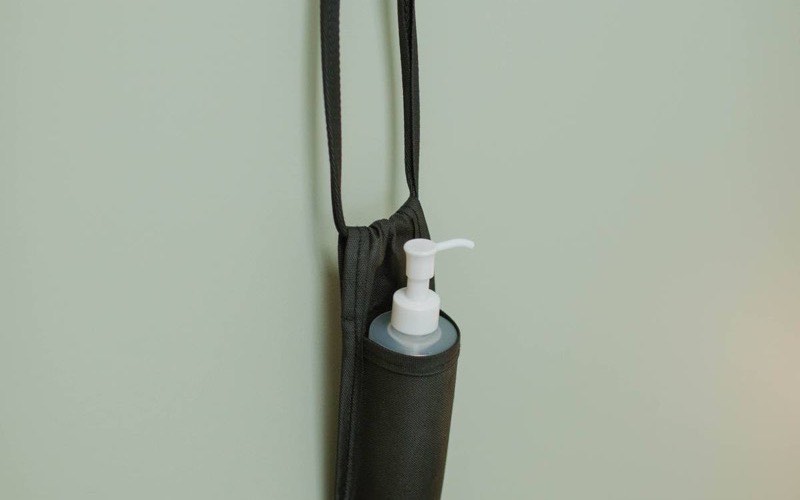 Sauna & Recovery
Chromotherapy: What the Coloured Lights in Our Sauna Are For
The lights are not decoration, and they are not medicine either. Here is the honest middle ground.
Read the guide → Sauna & Recovery
What 30 Minutes in a Full Spectrum Sauna Actually Does
Half an hour, no equipment, nothing required of you. Here is what is genuinely happening while you sit there.
Read the guide →