
Craniosacral Fascial Therapy: The Gentlest Bodywork on Our Menu
If you have ever been told your massage was "too gentle to be doing anything", this is the service that will change your mind.
Most people arrive at Craniosacral Fascial Therapy after trying everything louder. Deep tissue that helped for four days. Stretching that never quite touched it. A headache pattern nobody has been able to explain. CFT is what is left when force has not worked.
It also happens to be one of the few forms of bodywork appropriate for a newborn, which tells you most of what you need to know about how gentle it is.
What CFT actually is
Craniosacral Fascial Therapy combines two ideas.
The craniosacral part concerns the system running from the cranium down to the sacrum — the membranes and fluid surrounding the brain and spinal cord. Practitioners work with the subtle rhythm of that system, using very light contact at the head, spine and sacrum.
The fascial part concerns the connective tissue web that runs through the entire body, wrapping every muscle, organ, nerve and bone in a continuous sheet. Fascia does not respect the tidy boundaries of anatomy diagrams — a strain pattern in one place can create pulling somewhere far away.
Put them together and the working idea is this: strain patterns held in the fascial web can restrict the craniosacral system, and releasing those patterns lets the whole thing move more freely again.
What a session feels like
Genuinely unlike any other bodywork.
You stay fully clothed. There is no oil. There is very little movement. Your therapist places their hands somewhere — the base of your skull, your sacrum, your ribs, your feet — and holds. Sometimes for several minutes at a time. The pressure is often described as the weight of a nickel.
Then they wait. And this is the part that seems strange until you have experienced it: the tissue does something. Practitioners describe it as the tissue unwinding, softening or releasing under the hand. Clients often report a sensation of warmth, a pulse, a slow spreading release, or an unexpected sigh from somewhere in the body.
People frequently fall asleep. Some feel emotional. Many describe the hour as one of the deepest states of rest they have experienced. Others feel very little during the session and notice the difference the next day.
Who tends to benefit
Adults: people with headache and migraine patterns, TMJ and jaw tension, neck restrictions that keep returning, post-concussion symptoms, long-standing tension that has not responded to conventional massage, and anyone whose nervous system simply will not downshift.
People who cannot tolerate deep work: if you have a condition that makes firm pressure inadvisable, if you are recovering from surgery or injury, if you find deep tissue overwhelming — CFT gives you real bodywork at a pressure your system can accept.
Children and infants: this is one of the few hands-on therapies suitable from very early on. It is used for babies with feeding and latch difficulties, for infants who seem persistently uncomfortable or hold their head consistently to one side, and for children with recurring headaches. Sessions for children are short — infants especially, sometimes only a few minutes of actual contact.
We offer CFT for adults and for children on our massage menu, along with myofascial release scaled for babies and kids.
What to expect afterwards
- Immediately: most people feel spacious, quiet and slightly floaty. Do not schedule anything demanding straight after.
- That evening: tiredness is common and normal. Sleep is often notably deep.
- The next day: this is when many people notice range of motion changes — turning their head further, standing straighter without effort.
- Over the following days: occasionally a mild adjustment period as the body settles into a new pattern. It passes.
- Cumulatively: CFT is generally a series rather than a single event. Long-standing patterns rarely release in one hour.
Being straight about the evidence
We would rather you hear this from us. Craniosacral therapy is a complementary practice. The research base is limited and mixed, and the mechanisms practitioners describe are not settled science. Some studies report benefit for pain and headache; others find effects hard to distinguish from careful attention and deep relaxation.
What we can tell you honestly is that a great many clients find it valuable, that it is very low risk, and that it should be treated as a complement to medical care rather than a replacement for it. If you have a diagnosed condition, keep your doctor in the loop.
How to get the most from a session
- Do not brace for a massage. If you are waiting for the "real" work to start you will spend the hour tense.
- Let it be boring. Nothing dramatic happening is not the same as nothing happening.
- Say what you notice. Sensations, temperature changes, emotions — all of it is useful information.
- Leave space afterwards. Do not book it between a meeting and a school run.
- Give it three sessions before deciding whether it works for you.
Booking CFT in Houghton
Craniosacral Fascial Therapy is available for adults and children on our massage menu, alongside Cranial Sacral Therapy and Myofascial Release. If you are booking for a baby or a young child, mention it when you call 906-482-2200 so we can allocate the right kind of appointment.
Frequently asked questions
CFT is a very gentle hands-on therapy that combines craniosacral work — light contact at the head, spine and sacrum to work with the system surrounding the brain and spinal cord — with fascial release, which addresses strain patterns in the connective tissue web running through the whole body. Pressure is extremely light, often compared to the weight of a coin.
CFT is one of the few forms of bodywork considered appropriate for infants, precisely because the contact is so light. It is commonly used for babies with feeding or latch difficulties, persistent discomfort, or a strong head-turning preference. Infant sessions are very short, and it is worth mentioning at booking so the right appointment type is scheduled.
Because almost nothing visible is happening. The therapist holds a position with very light pressure and waits for the tissue to respond, rather than stroking or kneading. Many people notice more in the 24 hours after a session — freer movement, deeper sleep — than during it.
CFT is usually cumulative rather than a single fix. Long-standing patterns tend to release across a series, and most practitioners suggest giving it around three sessions before deciding whether it is helping you.
Come and see us in Houghton
Massage, full spectrum infrared sauna, wellness sessions and AVEDA salon services — book online, or call and talk it through first.
Keep reading
More from the Journal
 Massage & Bodywork
Raindrop Technique® and Aromatherapy Massage: What Is the Difference?
One is a specific protocol applied along the spine. The other is your massage, customised with oils chosen for you.
Read the guide →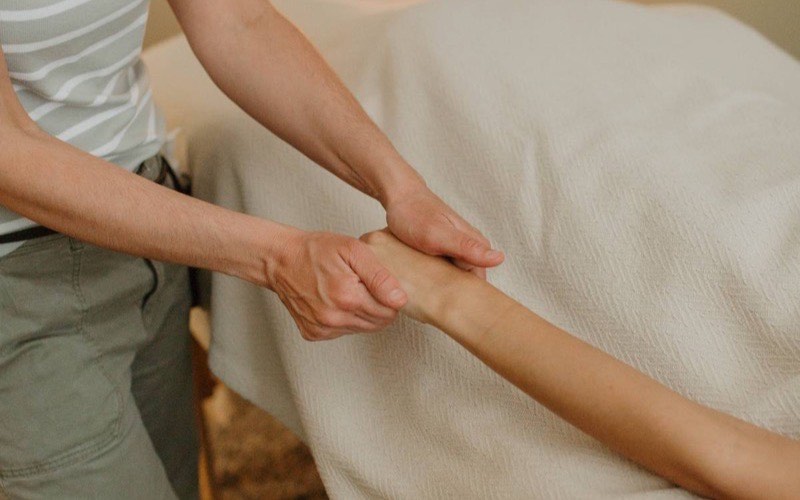 Massage & Bodywork
Hot Stones, Cold Stones: CoreStone and Migraine Massage Explained
Heat opens tissue so pressure can go deeper. Cold calms inflammation so a headache can back off. The stone is a tool, not a gimmick.
Read the guide →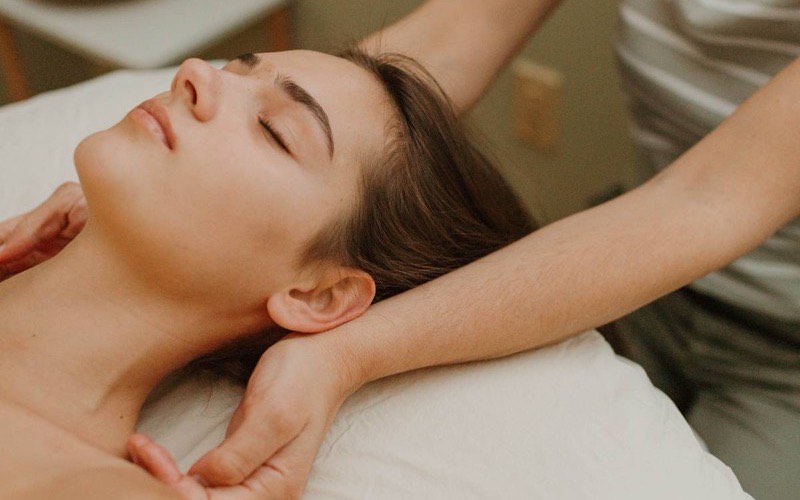 Massage & Bodywork
Neck and Shoulder Tension: Why It Keeps Coming Back and What Helps
Your shoulders are not tight because you slept badly. They are tight because of what you have been doing for eleven hours a day since September.
Read the guide →